
Free written scope consultation - allowances, timeline, and change-order rules on paper before a single trade is scheduled
Dvele Home Additions & ADU: The Orange County Owner’s Guide
Replacing or repairing a failed part on a Dvele home addition or ADU in Orange County typically runs $45,000 to $130,000 for a full addition, with ADU construction landing between $90,000 and $220,000 depending on scope, site conditions, and finish level. Most homeowners don’t wake up planning a project this size. They discover a problem: a roof assembly leaking at the transition, a panelized wall system showing moisture intrusion, a mechanical chase that was never flashed correctly, or a foundation stem wall that’s settled and cracked the factory seams. We see Dvele builds across Orange County where the original install was done by crews unfamiliar with panelized construction, and the failure shows up two or three years later in ways that don’t match standard stick-frame repair logic.
Here’s the thing most Dvele owners in Orange County learn the hard way: you can’t just call any remodeling contractor. The factory-built panel systems, the mechanical and electrical rough-ins that arrive pre-set, the specific sealing and flashing details where modules meet. Get those wrong and you’ve traded one problem for a worse one. We’ve been navigating those systems since panelized and modular builds first started appearing in Irvine’s older neighborhoods near the Spectrum, where 1980s lots got redeveloped with modern prefab additions. So before you start pulling trim or cutting drywall, let’s get you oriented on what you’re actually dealing with.
Key Takeaways:
- Dvele home addition repair or replacement in Orange County: $45,000 – $130,000 installed, depending on whether we’re repairing the existing system or replacing it.
- ADU construction tied to Dvele systems: $90,000 – $220,000, driven by utility runs, foundation work, and finish packages.
- We match Dvele panel and connection details, not just dimensions. The flange specs and sealant compatibility matter.
- Written price before any work starts, 365-Day Done Right Promise on every repair, and a live person answers the phone 24/7.
Which Dvele Models This Applies To
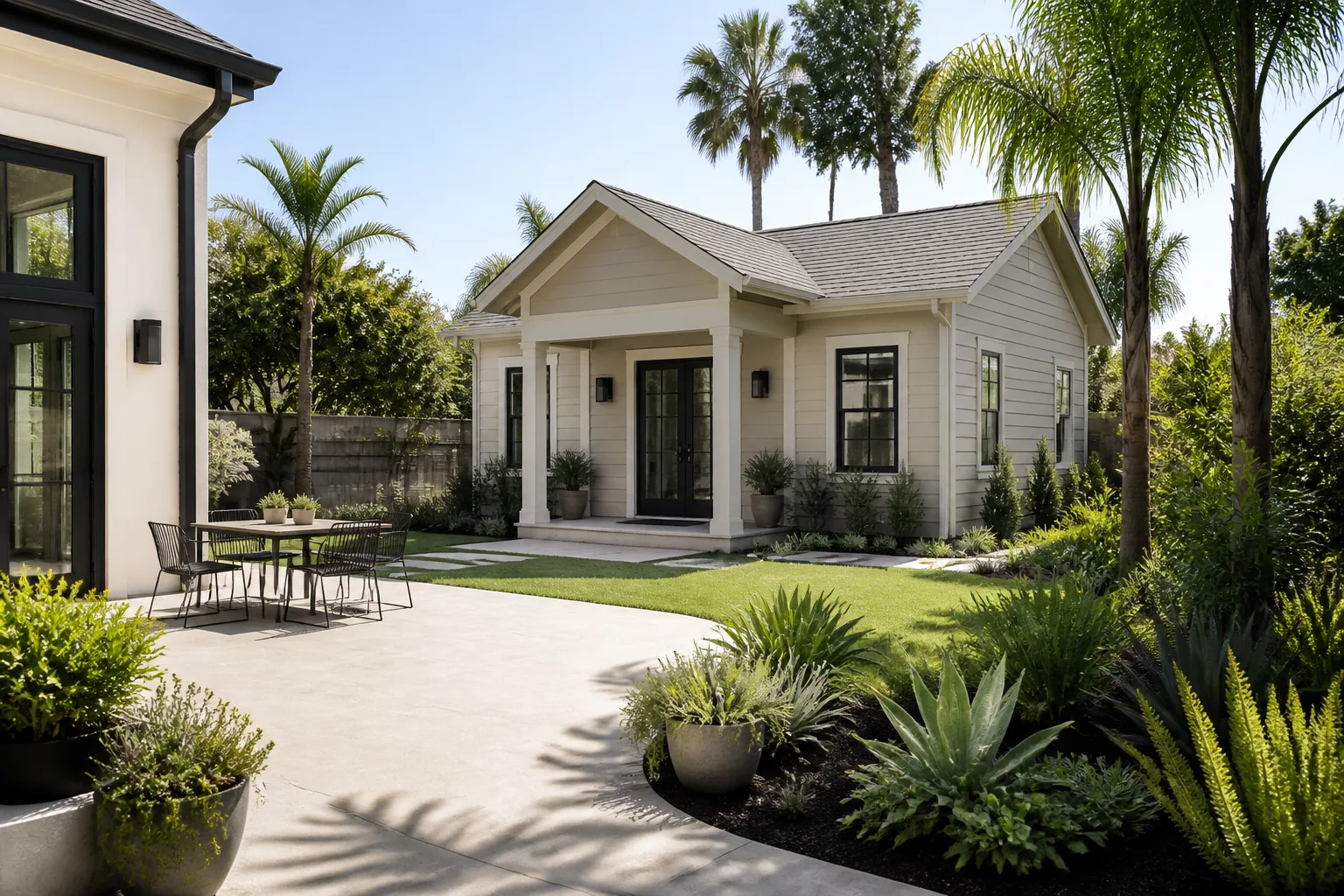
Dvele’s Orange County projects fall into two broad buckets: the panelized home additions and the accessory dwelling units built on their factory platform. The panelized systems use factory-cut wall, floor, and roof assemblies that arrive on site with pre-routed mechanical chases and pre-set window and door openings. The ADU line, whether it’s a detached unit or a garage conversion built on Dvele components, shares the same connection logic: module-to-module seams, factory-installed weather barriers, and mechanical rough-ins that land in specific, non-negotiable locations.
Here’s the compatibility gotcha we run into constantly in Orange County. The older Dvele installs, say pre-2019, used a different sealant specification at the panel joints than current production. If someone patches a seam with a generic caulk from the hardware store, it fails within a season or two because the original spec was a hybrid polyurethane with different elongation and UV properties. So when we do a repair or replacement on an older Dvele addition in southern Orange County, we match the sealant to the panel generation, not just grab a tube off the shelf. You identify your panel generation from the factory label, usually stenciled on the interior face of an exterior wall panel or inside a mechanical chase. It’ll have a series code and a manufacture date.
On the OEM-versus-aftermarket question for Dvele specifically: for structural panels and connection hardware, we insist on OEM or spec-matched equivalents. The factory-engineered clips, brackets, and flashing profiles aren’t generic. For interior finishes and fixtures, quality aftermarket equivalents are fine and often better, because swapping in a Kohler or Moen fixture doesn’t touch the structural envelope. The line is this: anything that keeps water out or holds the building up, match the spec. Anything behind the paint, use what serves you best.
Styles & brands we work with







Signs Your Dvele Home Additions & ADU Is Failing
- Water staining at interior panel seams or ceiling transitions. This is the classic Dvele failure mode in coastal Orange County. The module-to-module seams or roof-to-wall transitions weren’t sealed to spec, or the sealant aged out. You’ll see it first as faint discoloration at the corners, then as peeling paint or soft drywall.
- Doors and windows that suddenly drag or won’t latch cleanly. Dvele panels sit on a foundation system. If the stem wall or footing settles unevenly, which happens in the expansive clay soils around Irvine and Tustin, the panels shift and the pre-set openings go out of square. The door drag is the symptom. The foundation is the cause.
- Musty smell in one specific room or closet with no visible leak. The factory mechanical chases in Dvele panels run vertically through wall cavities. If a plumbing rough-in inside a chase has a slow drip, you’ll smell it long before you see it. By the time drywall shows water, the framing inside the chase has been wet for months.
- Visible rust or corrosion on exposed connection hardware. Those factory steel clips and brackets at panel joints are coated, but coastal air in communities like Newport Beach and Huntington Beach eats through coatings faster than inland Orange County. Rust on a bracket means the water barrier above it has already failed.
- Cracking in the exterior cladding in a stair-step pattern. Diagonal or stair-step cracks in stucco or siding over a Dvele panel joint usually trace back to differential settlement between modules. It’s not a surface crack. It’s the building telling you the foundation under one module isn’t holding the same as the one next to it.
Replacement Cost & What’s Included
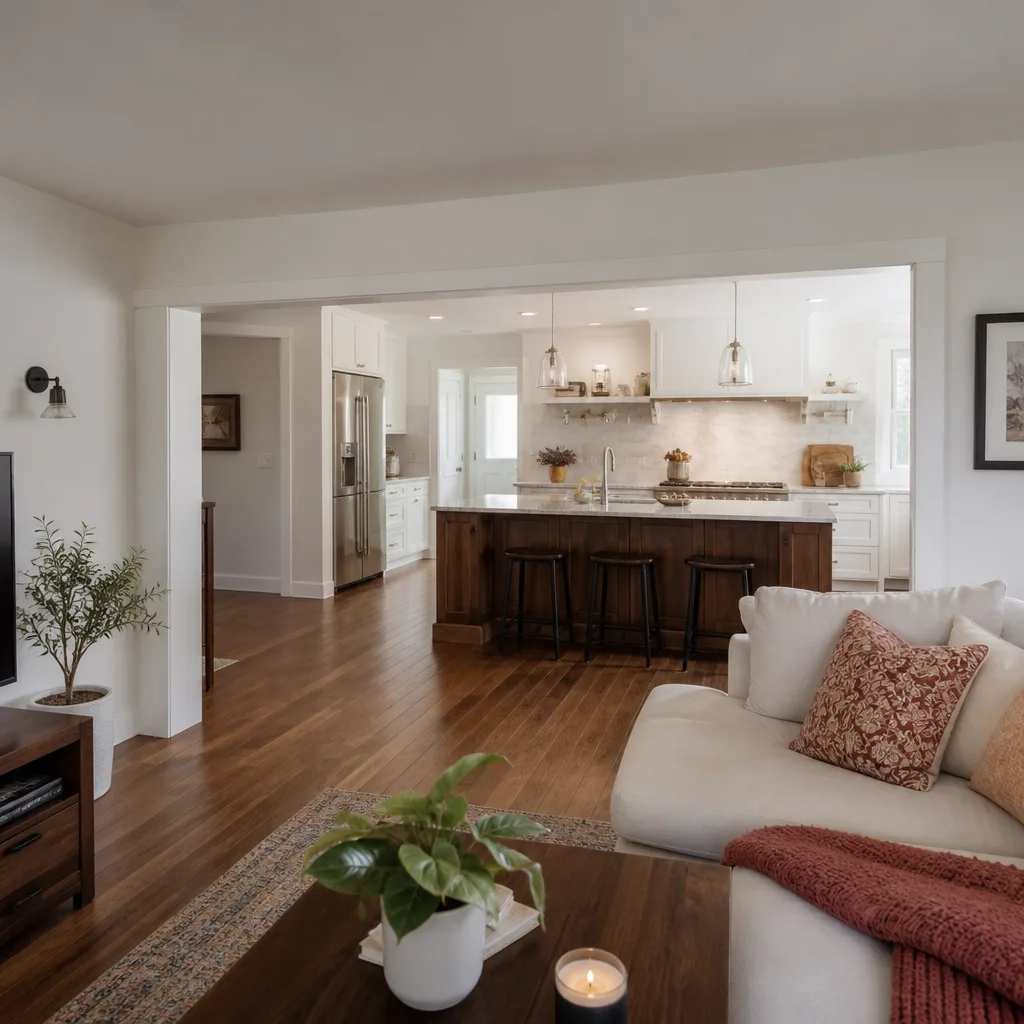
For Dvele home addition repair and replacement work in Orange County, full additions run $45,000 to $130,000. ADU construction lands between $90,000 and $220,000. What drives the number isn’t square footage alone. It’s what failed, where it failed, and how much of the existing system has to come apart to fix it right.
Foundation repair at a Dvele module connection is a different job than resealing a roof transition. The first means excavation, possible piering, and re-leveling the module, then cosmetically restoring the interior. The second is scaffold work, removing the old sealant, inspecting the panel edges for hidden rot, and resealing to the original panel-generation spec. Materials are a smaller slice of the total than you’d expect on repair work. Labor and access drive the bill, because Dvele systems don’t forgive shortcuts and neither do we. Every repair gets a written price before we start, and the number on day one is the number on the invoice. No change orders, no surprises at the door. The work carries our 365-Day Done Right Promise: if it’s not done right inside a year, we come back and fix it at no charge. In writing, on every project.
DIY or Call Us?
What you can safely do as a Dvele owner in Orange County: identify the panel generation from the factory label, take clear photos of the failure area, note when you first saw the symptom, and keep a log of whether it changes with rain or temperature. That information saves us real time on the first visit and helps us give you an accurate written price faster.
What you should not do: cut into a Dvele panel to “take a look.” Those panels are structural. The sheathing, the vapor barrier, the mechanical chases, they’re all engineered as a system. Opening one up without knowing what you’re cutting into means you might hit a pre-routed electrical run, compromise the air barrier, or remove material that was doing structural work. Same with resealing panel joints yourself. The wrong sealant on a Dvele seam means you’re doing the repair again in eighteen months, and now the panel edges have been contaminated with an incompatible product that has to be fully removed. If you’re seeing water intrusion or structural movement, call us at (424) 541-1701. We’ll come out, give you the number first, then pick up the tool.
See the difference
 Before
 After
After Before
 After
After Before
 After
AfterHow much does it cost to repair a Dvele home addition in Orange County?
Repairing a Dvele home addition or ADU in Orange County typically runs $45,000 to $130,000 for addition work and $90,000 to $220,000 for ADU construction, depending on whether the failure is in the foundation, the panel seals, the roof transition, or the mechanical systems inside the factory chases. Foundation re-leveling is the most expensive line item; resealing panel joints is at the lower end. Call (424) 541-1701 for an exact written quote after we’ve looked at your specific failure. Estimates are free.
Can a failed Dvele part be repaired, or does it need full replacement?
Most Dvele failures can be repaired without replacing the entire addition or ADU, unless the damage has been running long enough to compromise multiple panels or the foundation movement is severe. A failed panel seam is a repair. A settled module corner can often be re-leveled with piering. Full replacement only makes sense when the structural panel itself is compromised by long-term water damage or the foundation system has failed comprehensively. This determines the course: we always assess before we quote, and you’ll get a written recommendation either way. Call (424) 541-1701 to schedule a walkthrough.
How long does a Dvele repair or replacement take?
A typical Dvele panel joint reseal or roof transition repair in Orange County takes three to seven working days, including scaffold work, sealant removal, panel edge inspection, and resealing to the original spec. Foundation re-leveling adds one to three weeks depending on soil conditions and access. A full ADU build tied to Dvele components usually runs four to eight months from permit to final inspection. We’ll give you a written timeline alongside the written price before anything starts. Call (424) 541-1701 and we’ll lay it out for you.
Do you stock Dvele-compatible parts, or do you have to order them?
We keep the common Dvele connection hardware, spec-matched sealants for each panel generation, and flashing profiles on hand in our Orange County service inventory, so most repair jobs start without waiting on a factory order. Structural panels and OEM-specific clips that aren’t common failure points get ordered on a per-job basis, and we’ll tell you the lead time in writing before you sign anything. If you need to know whether we can start your repair this week, call (424) 541-1701 and ask directly. A real person answers.
We also work with other brand systems across Orange County, including KraftMaid cabinetry, Cambria and Silestone countertops, and the full Kingswell material roster.
Written by Trevor Nash, Owner, Penhallow Remodeling Orange County at Penhallow Remodeling Orange County, serving Orange County and nearby areas.


