
Free written scope consultation - allowances, timeline, and change-order rules on paper before a single trade is scheduled
James Hardie Home Additions & ADU: The Orange County Owner’s Guide
If you own a James Hardie-sided home in Orange County and you’re adding square footage, a second-story bump-out, or a detached ADU, the siding decision is not an afterthought. It’s the part of the project that decides whether the new structure looks like it belongs on your lot or looks like a bolt-on. A James Hardie home addition or ADU in Orange County typically runs $45,000 to $130,000 for the full scope when we’re matching existing HardiePlank lap siding, HardiePanel vertical siding, or HardieTrim boards. We handle the framing, sheathing, siding match, and finish as one crew, and we can usually have the siding portion of a standard bump-out done in five to ten working days once the structure is dried in.
Most owners discover they have a siding problem the same way: they walk out after a Santa Ana wind event and find a cracked plank, a popped nail head with rust bleeding down the paint line, or a bottom course that’s swelling because a previous contractor set it too close to grade. Orange County’s dry heat and coastal salt air do different things to fiber cement depending on whether you’re in Huntington Beach or Anaheim Hills. We’ve matched siding on homes from both sides of the county, and the failure patterns are consistent: bad installation, missed flashing, or the wrong nail schedule. The product itself holds up. The details around it are where jobs go wrong.
Key Takeaways:
- Full James Hardie home additions and ADU projects in Orange County run $45,000–$130,000 installed. Siding-only repair or re-side work sits lower, but a structural addition is always in five figures.
- HardiePlank lap siding, HardiePanel vertical sheets, and HardieTrim boards are not interchangeable. Matching the profile and the reveal matters more than matching the color.
- Fiber cement fails at the details: nails, flashing, and clearance gaps. We fix those first.
- We are an independent Orange County contractor. We install and match James Hardie products daily, but we are not a James Hardie dealership or corporate installer.
Which James Hardie Models This Applies To
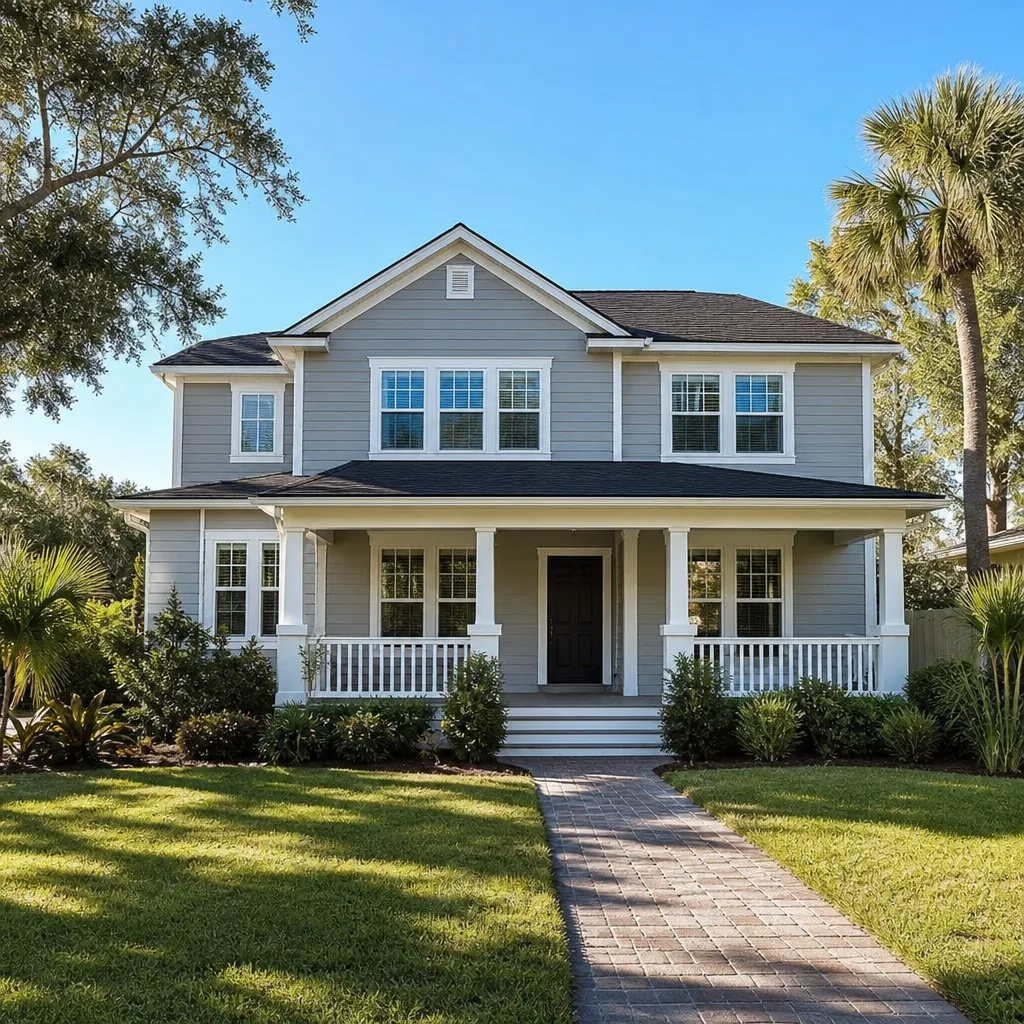
James Hardie makes three product families you’ll see on Orange County homes: HardiePlank lap siding (the horizontal boards, usually 5/16-inch thick), HardiePanel vertical siding (the 4×8 or 4×10 sheets used for gable ends and contemporary elevations), and HardieTrim boards (the corner boards, window casings, and fascia). Within HardiePlank, the two profiles we match most often are CedarMill, which has the wood-grain texture you see on 1980s and 1990s tract homes, and Smooth, which shows up on mid-century and modern builds. These are not cosmetic preferences. A CedarMill plank butted against a smooth plank will catch light differently enough that you’ll see the seam from the street even after paint.
Two gotchas we run into constantly in Orange County: first, the nominal 8.25-inch exposure on HardiePlank is a starting point, not a rule. Older homes in Irvine’s University Park and Woodbridge neighborhoods were often installed with 7-inch or 7.5-inch reveals, which means you cannot buy a new plank off the shelf and have the courses line up. We measure the actual reveal on your existing wall before ordering a single board. Second, HardieTrim is not rated for ground contact. If a previous installer ran trim boards all the way down to a concrete walkway, the bottom two inches are wicking moisture. That is the most common ADU siding failure we correct before it becomes a wall failure.
OEM versus aftermarket: James Hardie does not license aftermarket fiber cement for its profiles. You buy Hardie or you buy a different manufacturer. The aftermarket decision that matters is in the accessories: flashing, rainscreen battens, touch-up paint, and sealants. For those, we use brands spec’d for fiber cement, not whatever is on the shelf at the supply yard. The board itself is always genuine James Hardie when the existing siding is James Hardie. Mixing fiber cement brands on one elevation creates fastener pull-through and expansion differences that show up as cracks within two seasons. We don’t do it.
Styles & brands we work with







Signs Your James Hardie Home Additions & ADU Is Failing
- Rust bleed at nail heads on siding under three years old. This means the original installer used electrogalvanized nails instead of hot-dipped galvanized or stainless. The fastener is failing inside the board, and the rust is a preview of the board cracking as the nail corrodes and swells. In coastal Orange County air, this accelerates fast.
- Cracked planks running vertically from the bottom edge. Fiber cement does not spontaneously crack in the field of a board. Vertical cracks starting low usually mean the plank was installed with the bottom edge touching concrete or stucco, and capillary action is pulling water up into the board. The fix is cutting the plank up, flashing the transition, and leaving a clearance gap.
- Paint peeling in sheets, not flakes, on one wall only. That is moisture coming through from behind the siding. The board is not the problem. The missing housewrap or flashing behind it is. Repainting without fixing the drainage plane is just a six-month cosmetic patch.
- Caulk joints at trim boards that open every summer regardless of how much caulk you use. HardieTrim moves. It expands and contracts with temperature, and Orange County’s 95-degree summer days followed by 50-degree nights puts a lot of movement into long trim runs. The proper detail is a flashing joint, not a caulk joint. If you are re-caulking the same seam every year, the joint was detailed wrong from day one.
- Dark staining at the bottom course after rain, even though your gutters are clean. This usually means the siding clearance above grade or above the roof line is too tight. Hardie wants a minimum 6 inches above finished grade and 2 inches above roof surfaces at intersections. When that clearance is missing, the board sits in splashback or standing water and stains from below. It rarely rots, but it never dries out either, and the paint fails on a cycle.
See the difference
 Before
 After
After Before
 After
After Before
 After
AfterReplacement Cost & What’s Included
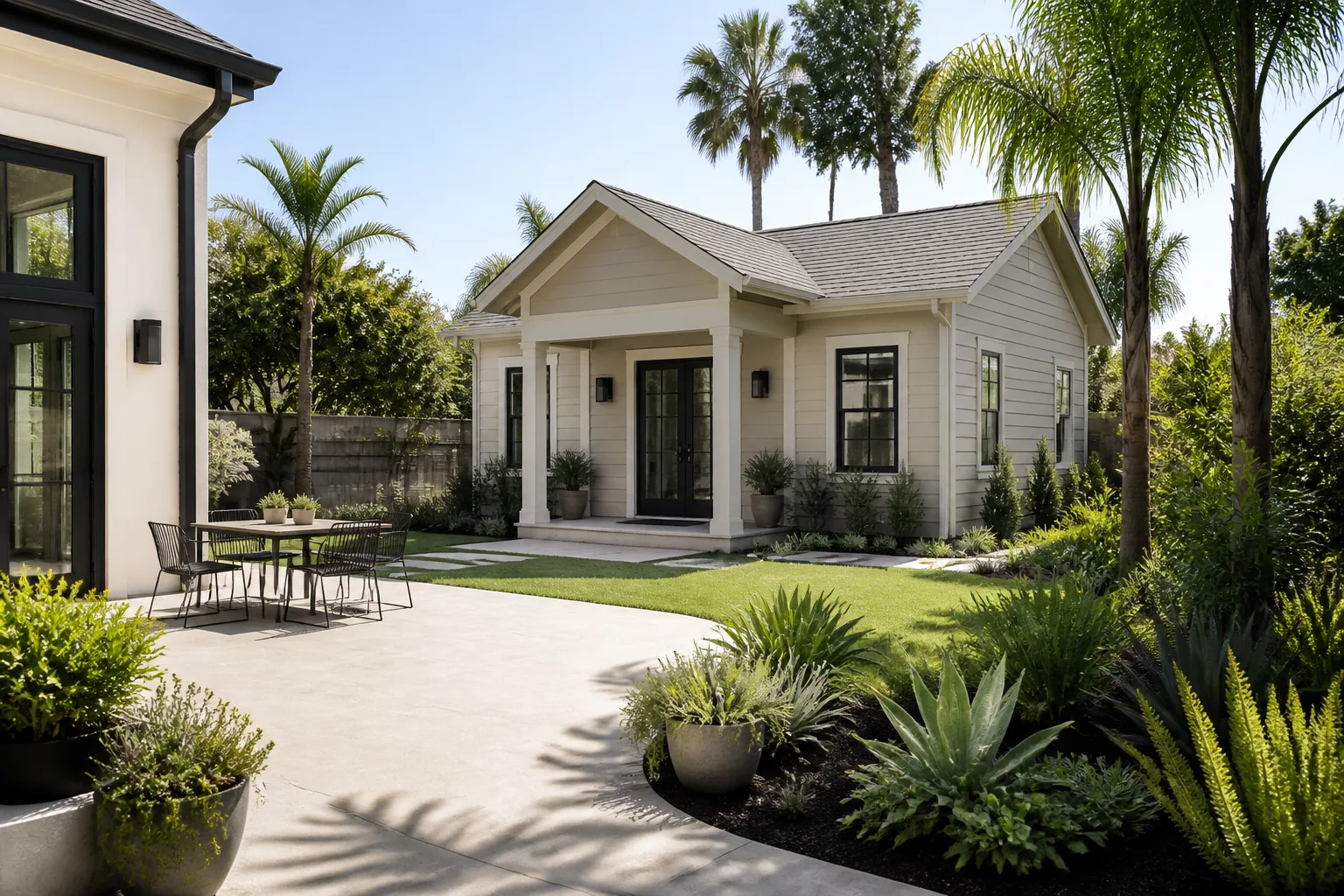
A full James Hardie home addition or ADU in Orange County runs $45,000 to $130,000 depending on square footage, whether you’re going one story or two, foundation type, and how much of the existing siding has to be removed and matched. A siding-only repair or a single-wall re-side on an existing structure sits much lower, but that is a different scope. Within that range, the framing and foundation drive the cost. A 400-square-foot ground-level bump-out on a slab foundation with one exterior wall will land at the lower end. A 700-square-foot second-story addition with HardiePanel gable ends, all-new HardieTrim, and an attached ADU feeding a new electrical panel lands at the top.
What you get with our number: a written line-item price before any work starts, the siding removal and disposal, any framing or sheathing repair, housewrap and flashing installed to Hardie’s published installation requirements, the correct profile-matched Hardie product, paint-grade trim, and a written 365-day warranty on the work. We also handle the permit drawings and the inspection coordination. The price on day one is the price on the invoice. If the siding fails inside the 365-day window, we come back and fix it at no charge. That is the Kingswell standard, and it applies to every addition and ADU we build in Orange County.
DIY or Call Us?
What you can check on your own: walk the foundation line and confirm the bottom course of siding has clearance above soil and concrete. Walk the nail lines and note any rust. Look at the trim joints and see if the caulk is cracked. These observations help you know if you actually have a problem or just an aging paint job. What you should not do is pull a plank off to inspect the sheathing behind it. Hardie boards are 5/16-inch fiber cement, heavy, brittle at the edges, and once a plank is removed, the weather-resistive barrier behind it is exposed. Reinstalling it correctly requires the right flashing, the right joint treatment, and the right fastener schedule. One wrong move and you have created a leak where none existed, hidden behind a board you will not see again until the paint bubbles.
Fiber cement is not a dangerous material the way high-tension parts are, but it fails silently and expensively. The cost of a mismatched repair that leaks inside a wall is never less than the cost of having it done once by someone who installs this product weekly. If you are in Orange County and want a straight answer about whether your siding is fine or failing, call (424) 541-1701. We’ll tell you the truth before we tell you a price.
FAQs
James Hardie fiber cement siding carries a 30-year non-prorated product warranty, and with correct installation, we see 40 to 50 years of service life in Orange County before boards need replacement due to mechanical damage or accumulated fastener fatigue. Paint lasts 10 to 15 years depending on sun exposure and whether the home is in a coastal fog zone like Corona del Mar or an inland heat zone like Yorba Linda.
Individual planks, panels, and trim boards can be replaced without re-siding the wall, as long as the failure is isolated and the surrounding boards are sound. We cut out the damaged board, inspect the sheathing and housewrap behind it, correct the original installation defect, and install a profile-matched replacement. If the same failure appears across multiple courses or the sheathing behind the siding is damaged, a partial or full re-side is the honest recommendation.
For a typical 400 to 600-square-foot addition, the siding and trim package takes five to ten working days once the roof is on and the walls are dried in. Larger ADUs or second-story work with extensive HardiePanel gable ends add time. Weather matters less with fiber cement than with paint, so rain is the only real delay.
We stock CedarMill and Smooth HardiePlank in the most common Orange County colors and exposures, along with HardieTrim corner boards and window casing. Custom colors and less common profiles are ordered per job, which adds a few days. We also order the correct flashing, rainscreen battens, and fasteners for every job rather than using generic stock from a big-box store.
If you’re adding square footage to an Orange County home with James Hardie siding, call (424) 541-1701 for a written estimate. We’ll match your existing siding, quote you a real number, and stand behind the work with a written 365-day guarantee.
Written by Trevor Nash, Owner, Penhallow Remodeling Orange County at Penhallow Remodeling Orange County, serving Orange County and nearby areas.


