
Free written scope consultation - allowances, timeline, and change-order rules on paper before a single trade is scheduled
Styles & brands we work with







See the difference
 Before
 After
After Before
 After
After Before
 After
AfterQuartz & Granite Countertops in Orange County, CA
Quartz and granite countertops in Orange County typically run $55 to $120 per square foot installed, with most kitchens landing somewhere between $3,200 and $7,800 for full slab fabrication and install. That’s the honest range you should expect from a licensed contractor who does template, fabrication, and installation under one roof. At Penhallow Remodeling Orange County, we write that price down before we touch your cabinets, and it stays the same through the final walkthrough.
This page covers what quartz and granite actually cost here, how the material choice affects daily use in a coastal Southern California kitchen, and what we do differently from the contractors who hand you a verbal number that drifts upward after demolition day. If you’re planning a Kitchen Remodeling in Orange County project that includes new counters, you’ll want the specifics before you sign anything. You can also reach us directly at (424) 541-1701 to talk through your project and get a written quote.
When You Need Quartz & Granite Countertops
Most of our Orange County customers call us when their existing counters have stopped working for them in ways they feel every single day. Here are the situations we see most often across Irvine, Huntington Beach, Mission Viejo, and the surrounding communities:
- Your laminate counters are delaminating at the seams. Water from the sink or dishwasher finds its way under the top layer, the edge starts peeling, and suddenly you’re avoiding the corner near the faucet. Once laminate loses its bond, refinishing is a temporary bandage on a permanent problem.
- Tile counters have become a grout maintenance job. The grout lines stain, crack, trap crumbs, and never quite come clean no matter what you scrub them with. Replacing tile with a single-slab quartz or granite surface removes roughly 30 linear feet of grout lines from your daily life.
- You’re selling a home in a market that expects stone. Orange County buyers in Costa Mesa, Tustin, and Yorba Linda regularly list granite or quartz counters on their must-have list. A house with laminate or aging tile gets discounted in their mind before they even make the offer.
- The sink area is showing water damage around the rim. A sink that was never properly sealed against the countertop will quietly rot the substrate (the structural layer beneath your surface material) over time. By the time you see swelling or staining, the damage underneath is usually worse than it looks.
- You bake, roll dough, or prep food directly on the counter. Quartz gives you a non-porous, food-safe surface that doesn’t require resealing like natural stone. For daily cooks, that single difference changes how the kitchen feels at 6 a.m. and 6 p.m.
- Your current stone is cracked, chipped, or stained beyond repair. Granite that’s cracked near a seam won’t hold a patch long term. Quartz with deep stains from red wine or turmeric isn’t coming back. When repair stops being honest advice, replacement is the responsible recommendation.
If any of these sound like your kitchen, the next step is a straightforward conversation about what replacement actually involves and what it costs here in Orange County. No pressure. Just numbers and facts.
Our Quartz & Granite Countertops Process
We follow a step-by-step process that keeps you informed at every stage. The sequence matters because it’s what allows us to put a price in writing before the work starts and stick to it through installation day. Here’s how it goes:
- Initial phone conversation. A real person answers at (424) 541-1701. You tell us what your kitchen looks like now, what’s failing, and what you want from the new surface. We ask about rough dimensions, sink layout, and whether you have an island or breakfast bar.
- In-home measurement and material selection. A background-checked, uniformed technician comes to your Orange County home at the window we gave you. We measure everything, discuss quartz brands like Cambria, Silestone, and Caesarstone versus granite options, and talk through edge profiles, sink mounting styles, and backsplash choices.
- Written quote delivered before any commitment. You get a written number that includes material, fabrication, templating, sink cutout, installation, and haul-away of your old counters. This is the same number on your final invoice. No ballpark. No surprises.
- Template and fabrication. We create an exact template of your cabinet layout using digital measuring equipment. The slab is cut and polished off-site to your selected specifications, including sink and faucet cutouts.
- Installation day. Our crew arrives in uniform at the scheduled time. Old counters come out, the new slab goes in, seams are leveled and bonded, and the sink and faucet are reconnected. We leave the job site clean before we leave.
- 365-Day Done Right Promise. Every installation comes with our written guarantee: if anything isn’t done right inside a year, we come back and make it right at no charge. That’s the whole promise, in writing.
This process is how we’ve operated since the Kingswell standard was established in 2004. Say the price before the work. Show up in the window we gave. Leave the place cleaner than we found it.
Quartz & Granite Countertops Pricing in Orange County
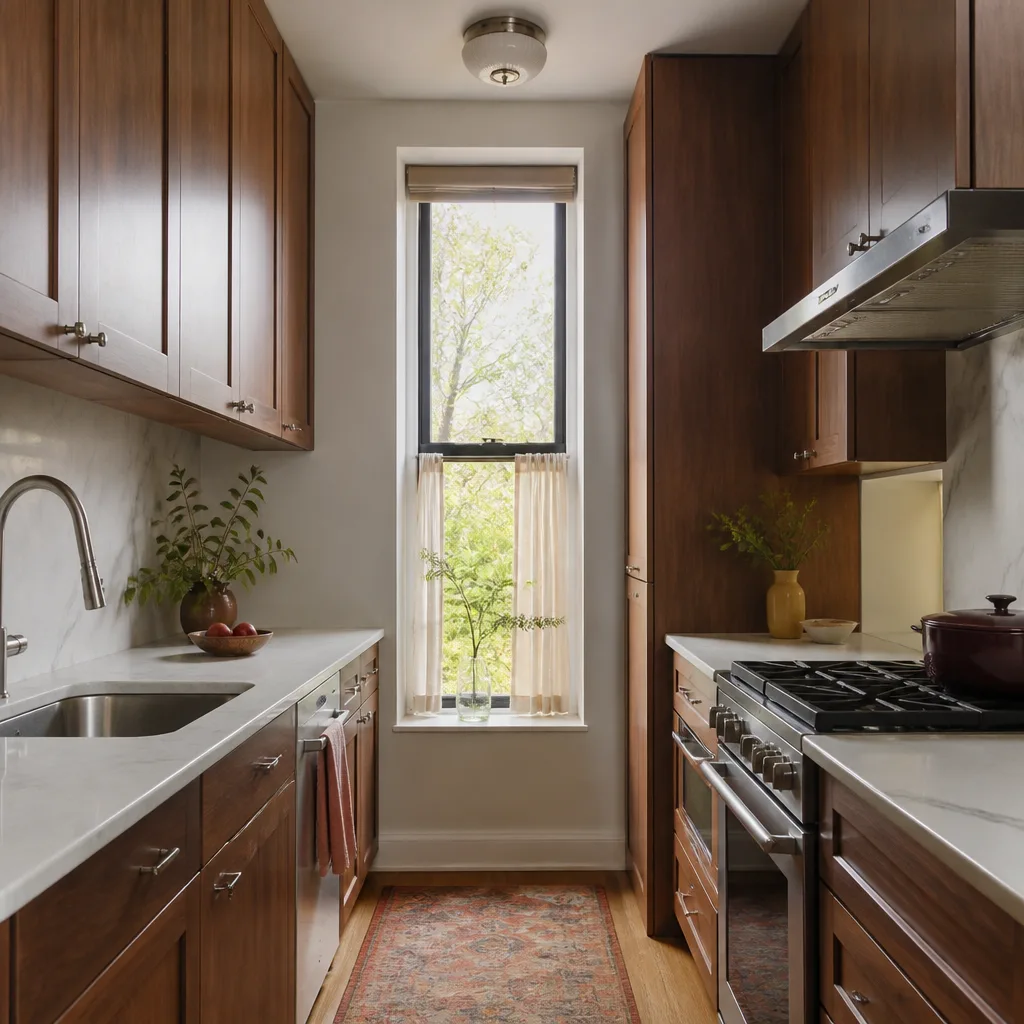
Here’s the direct answer: quartz and granite countertops in Orange County typically cost $55 to $120 per square foot installed, which places most full kitchens between $3,200 and $7,800. The exact number depends on a few variables we can explain in plain terms.
Quartz runs toward the middle and upper end of that range. Cambria quartz, which carries its own lifetime warranty alongside our 365-Day Done Right Promise, typically lands between $75 and $110 per square foot installed in this market. Silestone and Caesarstone are close behind at $65 to $95 per square foot. Natural granite tends to run a bit lower, usually $55 to $85 per square foot installed, depending on the slab’s origin and veining pattern.
What actually moves the price up or down in Orange County:
- Slab size and layout complexity. A straight run of counters with one sink cutout is the most economical configuration. Add an island, a breakfast bar overhang, or a peninsula, and fabrication time increases because each additional edge profile and support bracket adds labor.
- Edge profile selection. A simple eased or straight edge keeps fabrication costs down. Beveled, bullnose, ogee, and waterfall edges add $5 to $15 per linear foot because they require additional cutting and polishing passes.
- Sink mounting style. An under-mount sink (where the countertop lip covers the sink rim) costs more to fabricate than a drop-in sink because the cutout must be polished and sealed along its entire inner edge. It also looks better and is easier to wipe clean.
- Backsplash height and material. A 4-inch backsplash made from the same slab is a common upgrade. Full-height slab backsplashes add serious material cost in larger kitchens, often $1,500 to $3,000 on top of the base counters.
- Demolition and haul-away. Removing and disposing of old counters, whether tile or laminate or failing stone, adds labor and dump fees. Our written quotes include this line item so there’s no surprise charge at the end.
- Seam count and placement. Longer runs need more than one slab. Every seam adds fabrication time, color-matched bonding material, and the careful work of making two slabs read as one surface. We plan seams at sinks and corners to minimize visibility.
Every quote we write includes all of these variables priced out line by line. You’ll see exactly what you’re paying for before you agree to anything. If you want a free written estimate for your Orange County kitchen, call (424) 541-1701 and we’ll schedule the in-home measurement.
Quartz vs. Granite: Which Material Holds Up Better Here?
The climate in Orange County shapes this decision more than most people expect. We’re in a coastal zone where humidity swings between foggy mornings and dry Santa Ana afternoons. That means the material on your counters expands and contracts with the air, and the choice between quartz and granite matters for how the surface behaves over a decade of this cycle.
Quartz is an engineered stone made from roughly 93% crushed natural quartz bound with resin and pigments. That manufacturing process makes it non-porous, which means it doesn’t absorb water, wine, oil, or coffee. It never needs sealing. For a kitchen in a home with kids doing homework at the island and frequent dinner prep, quartz is the lower-maintenance choice, and it’s the material we recommend to about two-thirds of our customers.
Granite is a natural stone quarried from the earth and cut into slabs. Each slab is unique, with veining, mineral flecks, and color variation that no engineered material can replicate. Granite is porous to a degree and benefits from sealing every one to two years, though modern sealers make this a ten-minute job. Some of our customers in Laguna Niguel and San Clemente specifically want the look of natural stone and accept the small maintenance tradeoff.
Both materials handle heat from pots and pans without issue. Both resist scratches from normal kitchen use. The practical differences come down to maintenance frequency, stain resistance, and whether you prefer the uniform pattern of quartz or the organic unpredictability of natural granite. We’ll show you full-size samples of both during the material selection visit so you’re deciding with real slabs in your actual kitchen lighting.
What Your Existing Countertop Setup Affects
Before you pick a material, you need to know what’s underneath your current counters, because it determines part of the scope. Most Orange County kitchens built before the late 1990s have counters installed over a plywood substrate (the structural layer between your cabinets and the visible surface). Newer builds often use a cement board substrate, which is the moisture-resistant layer you’ll sometimes hear called a backer board.
If your current counters have water damage around the sink or dishwasher, that substrate may need partial replacement before the new slab goes in. We inspect this during the measurement visit and factor any substrate repair into your written quote. The worst case is a homeowner who discovers rotted substrate on installation day and gets hit with an unplanned change order because their contractor never looked under the surface. That doesn’t happen with us, because we check before we quote.
Cabinet condition matters too. Quartz and granite are heavy materials, typically 20 to 25 pounds per square foot. If your base cabinets have sagging floors, water damage, or structural issues, they need reinforcement or repair before the stone goes on top. We’ll tell you honestly if your cabinets need work first, and we’ll coordinate that work through our Kitchen Remodeling scope so the whole project sequences correctly.
How We Source Materials You Can Verify
The brands behind your countertop matter because they’re the second layer of protection after our own guarantee. We install quartz from manufacturers that stand behind their products with transferable warranties. Cambria quartz carries a lifetime warranty. Silestone and Caesarstone both offer strong limited warranties against manufacturing defects and staining. When we install those products, you get the manufacturer’s written warranty in addition to our own 365-Day Done Right Promise.
For sub-surface materials and installation products, we use recognized trade brands like Quikrete and Sakrete for any substrate work requiring leveling compounds or setting materials. These are the same products used in professional countertop installation across Southern California, and we’ll name them on your quote if you want to research them before we start.
We don’t keep an inventory of slabs in a warehouse. We order from regional stone yards after you select your slab, which means your countertop is cut specifically for your kitchen, not pulled from last year’s clearance rack. The lead time from template to install in Orange County typically runs 7 to 14 days depending on material availability.
Common Problems We See in Existing Orange County Kitchens
Over years of installing counters in homes across the county, we’ve learned to recognize patterns that tell us what we’re dealing with before we even lift the old surface off. These are a few things we regularly encounter, and they’re useful to know whether or not you hire us.
In older Irvine and Tustin tracts, we see tile counters set directly onto plywood with no moisture barrier. The grout lines eventually crack from house settling, water seeps through, and the plywood underneath swells and rots. By the time the homeowner notices loose tiles or a musty smell, the structural layer is compromised. This needs full substrate replacement, not a patch.
In tract homes across Mission Viejo and Lake Forest built in the 1980s and early 1990s, glued-down laminate over particle board is the standard original setup. Particle board has no structural strength once it gets wet, and it’s nearly impossible to remove laminate without damaging it. We always factor full substrate replacement into those quotes because it’s the only honest way to build.
Newer homes in Aliso Viejo and Ladera Ranch often have granite installed by the original builder. Those slabs are typically thinner than what we install today, and we see chips along the front edge from years of pots and pans bumping against the overhang. If the rest of the kitchen is in good shape, a counter replacement can refresh the whole room without a small or partial kitchen remodel.
Each of these situations has a correct fix and a cheap fix. We only quote the correct one, because a countertop that fails in nine months violates our guarantee and your trust.
Seams, Undermount Sinks, and the Details That Matter
The difference between a countertop install that looks good on day one and one that still looks good after five years is in the details you might not notice until someone points them out. Here’s what we pay attention to and why it matters.
Seam placement. A slab of quartz or granite comes in standard sizes, usually 120 to 132 inches long. If your counter run is longer than that, you need a seam. Where that seam goes matters. We place seams at natural breaks like the sink cutout or at inside corners where the eye doesn’t land. A poorly placed seam in the middle of a straight run is the first thing you’ll see every morning, and we do everything we can to avoid it.
Seam bonding and color matching. The adhesive used to join two slabs must be color-matched to your stone. This is a skill that comes from working with specific materials over years. We use professional-grade stone bonding adhesives and polish every seam flush so you can’t catch a fingernail on the transition.
Undermount sink attachment. An undermount sink is held to the stone with mechanical fasteners and silicone adhesive, not just glue. If the installer skips the mechanical support, the sink can eventually drop or the silicone can fail and leak into the cabinet. We use both methods, and we test the sink for water-tightness before the final walkthrough.
Overhang support. Quartz and granite overhangs past 6 to 8 inches need support brackets or corbels underneath, especially on islands and breakfast bars where people sit and lean on the edge. Unsupported stone can crack under weight. We check every overhang and include support hardware in the quote.
Leveling. Orange County floors aren’t always level, especially in older homes that have settled over decades. We shim and level the base cabinets or substrate before placing the slab so the counter is flat in both directions. A counter that’s an eighth-inch out of level will make water pool on one side of the sink and make the whole install look wrong.
Timeline Expectations for Countertop Replacement
Countertop replacement is faster than a full kitchen remodel, but it’s not a same-day project. Here’s the realistic timeline for most Orange County jobs:
- Day 1: Phone consultation and scheduling. We ask about your kitchen layout, current material, and what you want from the new surface.
- Day 2-5: In-home measurement and slab selection. This takes about 60-90 minutes, and you’ll see full-size material samples in your kitchen.
- Day 6: Written quote delivered. You review the line items, ask questions, and decide without pressure.
- Day 7-10: Template appointment. We create a precise digital template of your cabinet layout, including sink and faucet positions.
- Day 11-18: Fabrication. Your slab is cut and polished at the stone yard’s fabrication shop.
- Day 19-21: Installation. Old counters removed, new slab installed, sink and faucet reconnected, job site cleaned. You walk the finished product before we leave.
Total timeline: three weeks from first call to finished kitchen, assuming standard material availability. Some Cambria colors have longer lead times if they’re not stocked at the regional distribution center. We’ll tell you the expected timeline on the phone and confirm it in writing when you get the quote.
FAQs – Quartz & Granite Countertops
How much does quartz countertop installation cost in Orange County?
Quartz countertop installation in Orange County typically costs $65 to $110 per square foot for materials and labor, so a standard 45-square-foot kitchen with Cambria or Silestone quartz lands between $2,900 and $4,950 installed. The actual number depends on your total square footage, edge profile, sink cutout style, backsplash height and tile, and whether your existing substrate needs replacement. Call (424) 541-1701 for a free written quote with line-by-line pricing for your specific kitchen.
Is quartz more expensive than granite in Orange County?
Yes, quartz is generally more expensive than granite in Orange County by about 15% to 25%, with quartz averaging $65 to $110 per square foot and granite averaging $55 to $85 per square foot installed. The premium is driven by manufacturing costs and brand warranties. Granite’s lower price reflects the higher availability of natural slabs, though rare or exotic granite can exceed quartz pricing.
How long do quartz and granite countertops last?
Quartz and granite countertops both last 25 years or more with normal use, with quartz needing no periodic sealing and granite benefiting from resealing every one to two years. The lifespan is ultimately determined by whether the substrate was properly prepared and the install was done correctly. We back every installation with our 365-Day Done Right Promise, so if any workmanship issue appears inside a year, we return and fix it at no charge.
Can you replace just the countertops without replacing the cabinets?
Yes, you can replace countertops without replacing or refacing cabinets as long as your cabinet boxes and bases are structurally sound, level, and free of water damage. We’ll confirm cabinet condition during the measurement visit and tell you honestly if any repair or reinforcement is needed before the new slab goes on. This is a common project in Orange County homes where the cabinets are still in good shape but the original counters have failed.
Do you offer a warranty on countertop installation?
Yes, every countertop installation comes with our 365-Day Done Right Promise in writing: if the work isn’t done right inside a year, we come back and make it right at no charge. We also provide a second visit at no charge if a repair fails during the guarantee period. On top of our own guarantee, manufacturers like Cambria provide lifetime warranties on their quartz products, giving you two layers of written protection. Call (424) 541-1701 to get the full details in writing with your quote.
Why Orange County Homeowners Choose Penhallow Remodeling
Homeowners in Orange County have plenty of countertop contractors to choose from, and most of them will tell you the same thing: they do good work, they’re licensed, they care about quality. The ones we end up working with usually tell us they chose us because of what we put in writing and who picks up the phone.
We operate under the Kingswell standard, which has required a written price before any work starts since 2004. You don’t get an estimate range or a verbal ballpark. You get a written number with line-by-line detail, and that’s the number on your final invoice. If something changes during the project, we tell you before the change happens and we re-quote in writing before any additional work proceeds.
The same standard applies to our guarantee. The 365-Day Done Right Promise isn’t a verbal commitment or a handshake. It’s printed on your project documents, it says exactly what it covers, and it says exactly what happens if something fails: we come back and fix it at no charge, and if that repair fails, the second visit is free too.
When you call at 7 a.m. or 11 p.m. or any hour in between, a live person answers. Not an answering service, not a voicemail prompt, not a callback form. A person who can take your name and have a technician scheduled. Every technician who comes to your home has passed a background check and arrives in uniform, so you know exactly who’s walking through your door.
The materials we install come from recognized trade brands: Cambria, Silestone, and Caesarstone for quartz and engineered stone, Quikrete and Sakrete for any substrate and setting materials. These brands are named on your quote, and their warranties are documented, because the layers of protection behind your countertop should be as visible as the surface itself.
If you’re ready to replace failing counters, upgrade before listing your home, or finally get the quartz kitchen you’ve been planning, call us at (424) 541-1701. We’ll schedule an in-home measurement, quote the job in writing, and walk you through the whole process from slab selection to final cleanup. No pressure, no price changes, no surprises. Just a written number, a written guarantee, and a kitchen you’ll be glad to use every morning.
Written by Trevor Nash, Owner at Penhallow Remodeling Orange County, serving Orange County.


